Air handlers · Drain lines · Drain pans
AC Leak Water Damage Drying and Repair
Switch the AC off at the thermostat and catch the drip. Call, and every wet spot the leak reached gets dried, not only the one you can see.
Call South Florida Restoration Co about AC leak water damage in Miami-Dade, Broward, Palm Beach and Martin counties: a wet closet floor, a soaked baseboard or a stained ceiling in the condo downstairs. Air handlers here run most of the year, so a clogged condensate drain line or a rusted drain pan can leak for days before anyone notices. Tell us where the unit sits and what the water reached, and we’ll get a licensed, insured crew to find every wet spot, dry it and replace what can’t be saved.
Where the water goes depends on where the air handler sits
AC water runs downhill and sideways, under baseboards and into the nearest soft material.
| Where the air handler is | Where the water usually ends up | What gets checked |
|---|---|---|
| Hallway or interior closet, single-story home on a slab | Closet floor, carpet and pad at the doorway, bottom of the closet walls | Pad and tack strip, baseboards, drywall a foot or two up both sides of each wall |
| Closet in a condo or apartment | All of the above, plus the ceiling of the unit below | Both units, with readings on the ceiling and walls downstairs |
| Above a ceiling, behind an access panel | Ceiling drywall and insulation first, then the floor under it | Insulation over the stain, ceiling framing, light fixtures in the wet area |
| Garage | Slab, stored boxes, the wall shared with the house | The shared wall and the room behind it |
Why an AC leak can run for days without anyone noticing
The EPA’s WaterSense guidance puts condensate at 3 to 10 gallons a day for every 1,000 square feet of air-conditioned space. All of it leaves through one small drain line. When algae or debris plugs that line, the pan overflows somewhere nobody looks: the back of a closet, the inside of a wall, the top side of a ceiling.
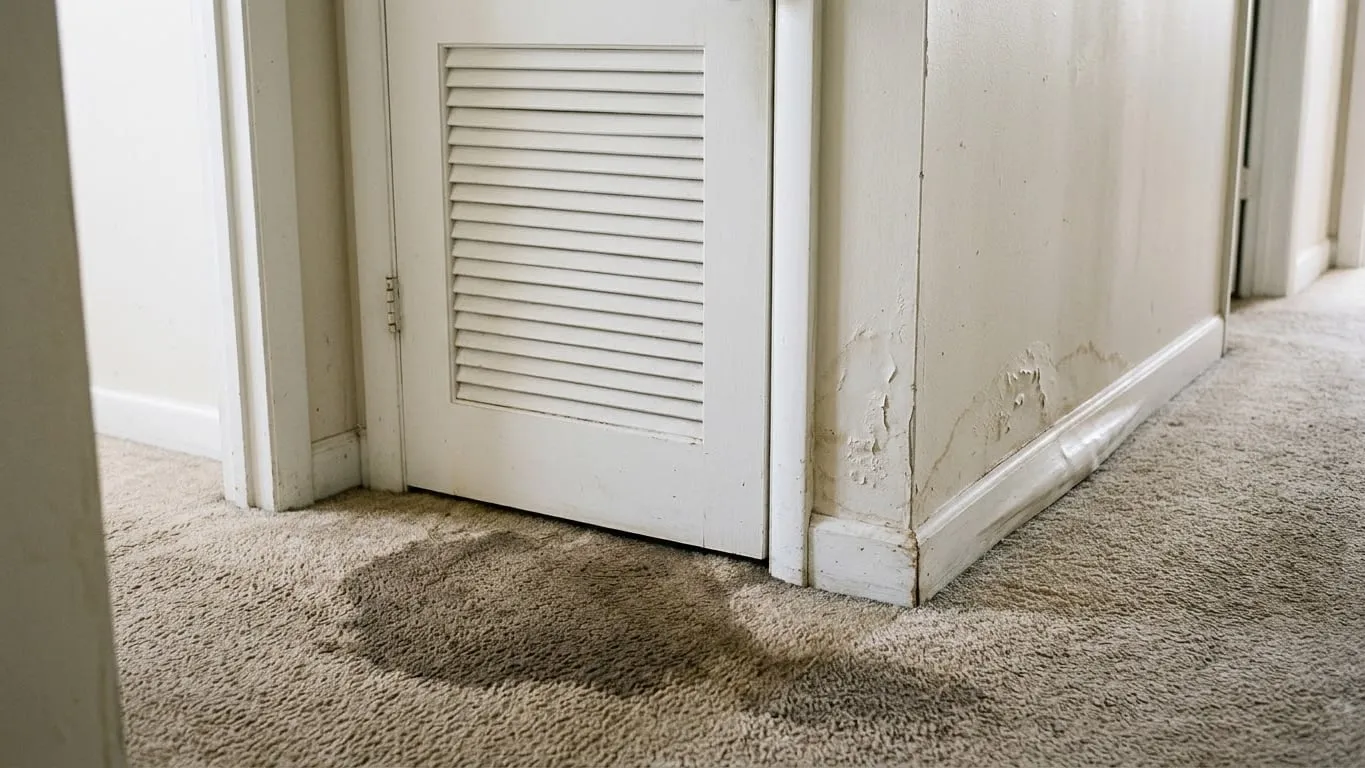
A ring on the ceiling or damp carpet at the closet door is often the first sign, after the water has been running for days. That’s why the check goes well past the closet floor.
When the AC shuts itself off
Florida’s building code requires a backup on most AC systems: a secondary drain pan, or a water-level switch in the pan (most people call it a float switch) that shuts the system down when the drain backs up. If your AC stopped on its own with water standing in the pan, that switch probably did its job. Leave the system off until the drain is cleared, and check the closet and the ceiling below for water that got out before it tripped.
Before anything else, switch the AC off
- Set the thermostat to off so the coil stops making water.
- Put a pan, bucket or towels under the drip, and move furniture and boxes out of the way.
- Stay out from under a sagging or bulging ceiling, and away from light fixtures in a wet one.
- Take photos of the closet, the stain and anything that got wet before it’s moved.
- In a condo, tell management and the unit below. The water may already be in their ceiling.
Then call and tell us how far the water got.
Drying the closet, the wall and the ceiling
Most AC water is clean condensate, so much of what it soaks can be dried in place if the work starts early. The carpet at the closet doorway gets pulled back, and the pad and tack strip usually come out because they hold water against the slab. Baseboards come off so air reaches the bottom of the drywall. Then air movers and dehumidifiers run, with moisture readings each day until the wall, floor and framing read normal.
The readings and the drywall itself decide the ceiling. A stain on firm drywall usually dries, then gets sealed and painted. A section that sags, feels soft or has wet insulation above it comes down, insulation and all. The ceiling leak guide covers the signs that a wet ceiling is about to drop.
The AC often stays off while the drain line or pan is repaired, and a closed-up South Florida house gets humid fast, so the dehumidifiers carry the load. The CDC suggests keeping indoor humidity at 50 percent or below, and that’s the target until the system is back on. The full drying process is on the water damage restoration page.
When the water reached the unit below
Water from a closet on the fifth floor can show up as a stain in the fourth-floor hallway, or inside a wall shared with the unit next door. Both units get readings, and the wet drywall and ceiling in each get dried or cut out. When a shared wall or riser is involved, management or the building engineer usually needs to be in the loop. Photos and readings from both units keep everyone working from the same record, and the guide to water leaking from the condo unit above covers getting the source shut off when nobody is home. Associations and property managers with several units wet at once can see how commercial water damage jobs are phased.
Mold after a slow AC leak
A leak caught the same day rarely turns into mold. A slow AC drip keeps the bottom of a closet wall or the back of a baseboard damp for days or weeks, well past the 24 to 48 hours the EPA gives for drying wet materials. If the closet smells musty or there are dark spots where the wall meets the floor, mention it when you call. Growth behind the drywall turns the job from drying into mold remediation, and the guide to mold after water damage covers the early signs.
A stain that’s still growing means the drain is still backing up, so switch the AC off if it’s running. The sooner the readings start, the more of the closet and ceiling can stay. Call while it’s still wet.
Signs the AC has been leaking
- 01A brown ring or bubbled paint on the ceiling near the air handler closet or access panel.
- 02Carpet that feels damp or smells musty at the AC closet door.
- 03A swollen baseboard or peeling paint low on the wall beside the closet.
- 04The AC shut itself off and there is water standing in the drain pan.
- 05Water dripping from a supply vent or a wet ring on the ceiling around it.
- 06A neighbor below says a stain showed up on their ceiling.
The process
From a wet AC closet to a dry house
- 1
Stop the source
The drain line or pan gets cleared, or the system stays off, so no new water reaches the area being dried.
- 2
Map the moisture
Readings are taken across the closet floor, the walls on both sides, the ceiling and, in a condo, the unit below, so every wet spot is on the list before anything is removed.
- 3
Pull what holds water
Wet pad and tack strip, swollen baseboards, sagging ceiling drywall and soaked insulation come out so air can reach the structure.
- 4
Dry and dehumidify
Air movers and dehumidifiers run around the clock, keeping the air dry even while the AC is off for repairs.
- 5
Confirm it is dry
Daily readings show when the framing, drywall and slab are back to normal, and only then do baseboards, drywall and flooring go back.
Related services
- Emergency Water RemovalFast extraction of standing water from burst pipes, water heater failures, overflows and storm intrusion.
- Mold RemediationContainment, HEPA filtration, removal of affected materials and moisture correction after a leak.
- Water Damage RestorationExtraction, structural drying, moisture monitoring and repairs after a leak or overflow.
Where this service is available
View all service areasFAQ
Common questions
Can an AC unit cause water damage?
Yes. When the condensate drain line clogs or the pan rusts through, the water an air handler makes goes onto the closet floor, into the ceiling below or into the unit downstairs.
Why is my AC leaking water inside the house?
Usually a clogged condensate drain line or an overflowing, cracked or rusted drain pan. A coil that iced over and then thawed, or a refrigerant line sweating outside the pan, can also drip where the pan can't catch it.
Why is water dripping from my AC vent?
Usually condensation. When humid air meets a cold supply vent or a poorly insulated duct, water forms and drips, and it happens fast here if a door or window is left open. A wet ring around the vent means the ceiling drywall is getting wet too, so it gets dried like any other leak.
How long does it take to dry out an AC closet?
A few days for a closet floor and the bottom of a wall when the leak is caught early. It runs longer when the ceiling and insulation got wet or the drip went on for weeks. Daily moisture readings decide when the equipment comes out, not the calendar.
Does the AC have to be fixed before the drying starts?
The leak has to stop first, either by clearing the drain line or by keeping the system off. Drying a wall that an overflowing pan is still feeding doesn't get anywhere. Mention whether the AC is off or still running when you call.