Houses from the land boom
Roughly one West Palm home in eight predates 1950, and the city keeps 18 local historic districts, many of them laid out during the 1920s land boom.
Palm Beach County
Plaster walls and original pipes in older West Palm homes dry and fail differently. Call, and the readings decide what stays before anything is torn out.
ZIP codes in the area
Some of these ZIP codes also include neighboring communities.
West Palm Beach has 1920s houses a few blocks from new downtown towers. When you call South Florida Restoration Co about water damage, we start with what the walls are made of, because a plaster bungalow in Flamingo Park and a drywall condo off Okeechobee Boulevard don’t get dried the same way.
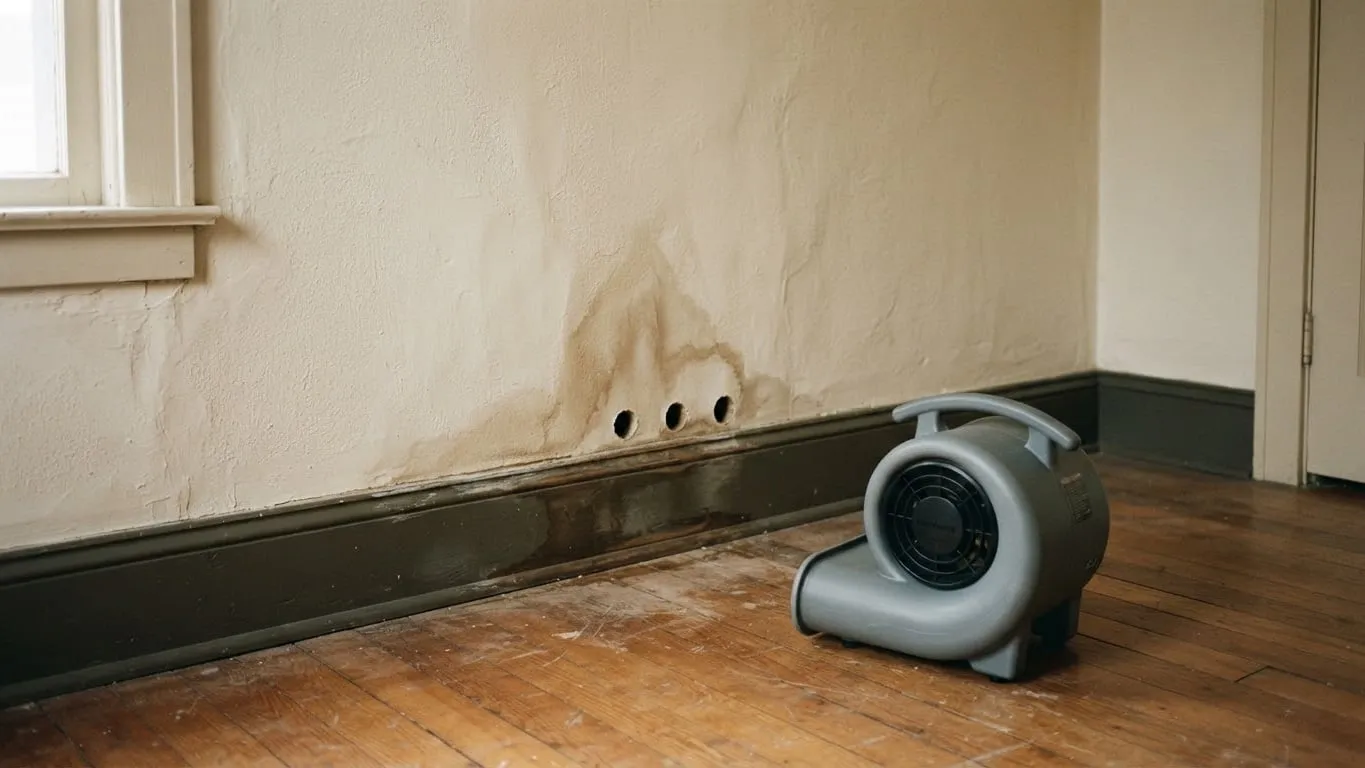
Many houses from the 1920s through the 1940s have plaster walls, over wood lath or applied straight to block or clay tile. Plaster is dense: it soaks up water more slowly than drywall, holds it longer and reads wet for days after the surface looks fine.
Plaster soaked by a clean leak is usually dried in place, with dehumidifiers, air movers aimed at the wall and a few small holes near the floor to move air through the cavity. It comes out only where it has let go of the lath, crumbles or stays wet after the rest of the wall dries.
Houses from the land boom and the decades after often still have galvanized supply pipe and cast-iron drain lines, sometimes with copper or plastic patched in. Galvanized pipe rusts from the inside until it splits at a joint. Cast iron cracks along the bottom where water has run for decades. Either can leak out of sight for weeks, behind plaster or under the floor.
Some older frame houses sit on piers over a crawlspace. A leak drains under the house and soaks the floor framing and the underside of the boards, so the crawlspace gets dried with the rooms.
Much of the newer housing is attached: condos, villas and townhouses, plus the towers downtown and along Flagler Drive. Water crosses party walls and comes down through ceilings, and in a tower the riser often has to be shut first. If yours is the unit underneath, the condo leak guide lays out who to tell and in what order.
Overflowing AC drain pans are common in these units too, and the page on water damage from an AC unit shows where that water goes.
West Palm takes water from two directions. The city says king tides arrive every September through November, and NOAA storm records show tide water across the road near Flagler Drive and 10th Street in October 2017 and about 6 inches on Flagler Drive in October 2025. More than a dozen tide-prone neighborhoods now have tidal flood valves that keep Intracoastal water from backing up into the storm pipes.
Rain does the rest. On August 6, 2019, 2 to 3 inches in 30 minutes put water up to car headlights on Flagler Drive, Parker Avenue and Banyan Street, NOAA storm records show, and in August 2020 streets in Prospect Park were partly under water. Pineapple Park sits at the bottom of a slope and drains into the Stubb’s Canal; one resident told WPTV the water reached his windows during Hurricanes Frances and Jeanne.
Street water that gets into a house carries whatever was on the road, so it’s handled as flood cleanup: soaked flooring and the lower drywall come out, and the rest gets washed before it’s dried.
A West Palm Beach address doesn’t always mean the city. Unincorporated areas to the west, including Westgate and Century Village, use West Palm ZIP codes and are covered on the same line. Don’t see your ZIP? Call anyway and we’ll check your address.
Calling about an older house? Tell us the decade it was built and whether the walls are plaster. That decides how the drying gets set up.
Roughly one West Palm home in eight predates 1950, and the city keeps 18 local historic districts, many of them laid out during the 1920s land boom.
Census estimates for 2024 put more than a quarter of the housing in the 1970s and 1980s, an age when supply lines, valves and water heater connections start to give.
One home in three sits in a building of 20 or more units, where water from one unit tends to find its way into the next.
Services
FAQ
Yes, 33417 is a covered ZIP. The buildings there share walls and floors, so give us the building, the unit and whether a neighbor is getting wet, and both units get checked.
Often, when drying starts early and isn't rushed. Old solid wood is thicker than most of today's flooring and tends to settle back down as it dries, checked against boards in a dry room. Any boards still lifted or bowed once the readings are normal get swapped out.
Not until it's been checked. Old textured finishes and patching compound can contain asbestos, and plaster from that era often has both. Tell us roughly when the house was built so it gets planned for before anything is opened.
Call now
Shut off the water if you can reach the valve safely, then call. Describe where it came from and which rooms are wet.
When you call, have ready