FAQ
Water damage questions and straight answers
Short, direct answers about when to call, how restoration works and what to do in the meantime.
Right now
Who do I call for water damage?
Call us. The line is answered 24/7, and the first questions are simple: where the water came from, how long it has been there and which rooms or floors are wet. From there we get a licensed, insured restoration crew out to extract the water and start drying.
Is a small leak worth a call?
If the water stayed on a hard surface and was wiped up within an hour or two, usually not. Call when water reached drywall, went under flooring or cabinets, came through a ceiling, or came from a toilet, sewer line or outside flooding. Those situations tend to hold moisture you cannot see.
Can I call in the middle of the night?
Yes. The phone line is open 24/7, including weekends and holidays. Water damage does not wait for business hours, and drying works best when it starts early.
How fast does water damage spread?
Faster than it looks. Water wicks up drywall and under flooring within hours, a ceiling leak can reach the unit below the same day, and the EPA says materials not dried within 24 to 48 hours can start growing mold. That's why extraction and drying come before any repairs.
Is it safe to stay in a house with water damage?
Usually, if the water was clean and the wet area is contained. Stay out of rooms with a sagging ceiling, standing water near outlets or cords, or sewage on the floor, and keep kids and pets away from those spaces until the area is made safe.
What should I do while waiting?
Stop the water at the fixture or main shutoff if you can do it safely. Stay away from wet outlets and cords, and avoid rooms with sagging ceilings. Photograph the damage, move valuables and electronics to a dry room, and put foil or plastic under furniture legs sitting on wet carpet.
Should drying wait until the paperwork is sorted?
No. Photograph the damage, then start drying the same day. Mold can start within 24 to 48 hours, and waiting for paperwork lets it spread. Keep the photos and the daily moisture readings.
Which areas are covered?
Miami-Dade, Broward and Palm Beach counties, plus Stuart, Palm City, Hobe Sound and Port Salerno in Martin County, Key Largo and the Glades towns. Check your ZIP code on the service areas page. Don't see your ZIP? Call anyway and we'll check your address.
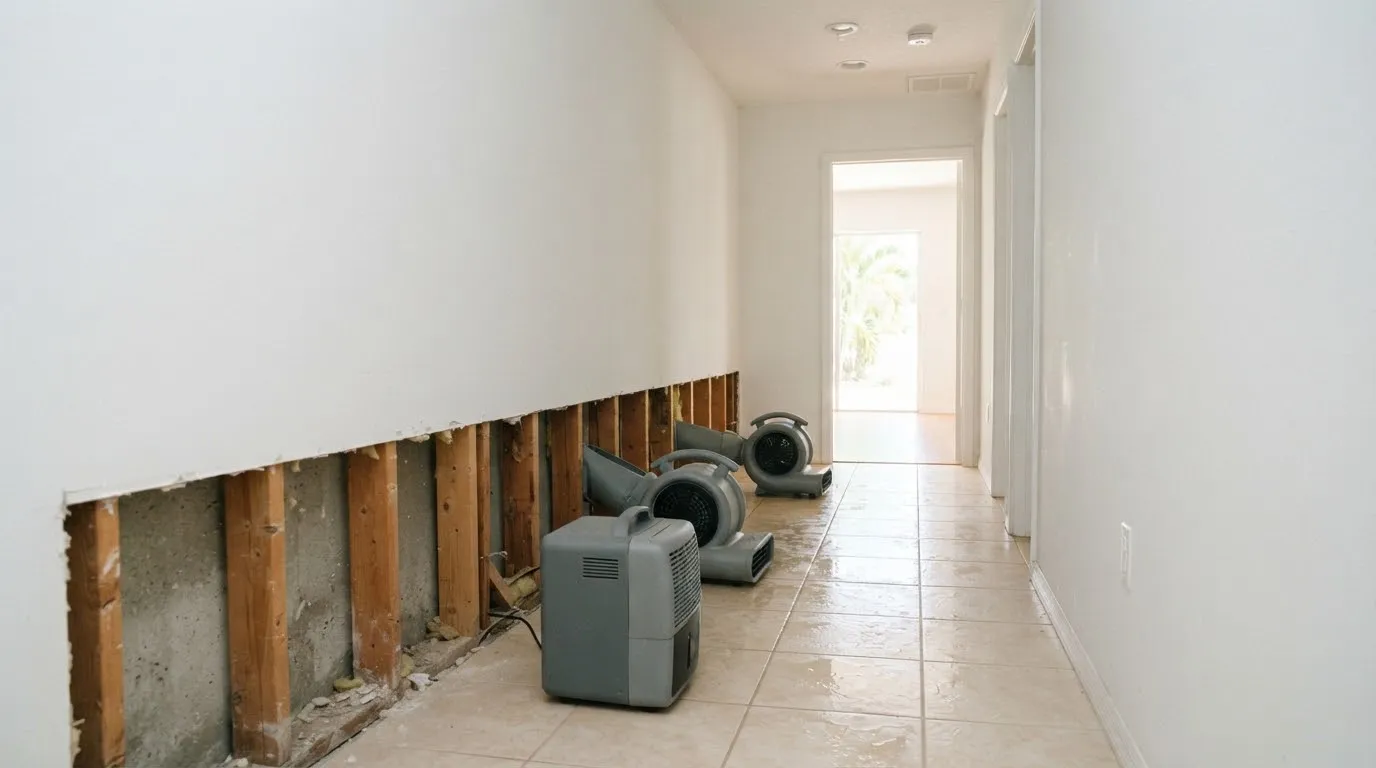
Drying and repairs
How long does water damage restoration take?
Extraction and setup usually happen on the first visit. Drying commonly takes about three to five days, with moisture readings each day. Repairs such as new drywall, baseboards or flooring come after the structure is dry, so the full job can run from a few days to a few weeks.
Do I need to leave my home during drying?
Often not. Drying equipment is noisy and runs around the clock, but many people stay home. Leaving is more likely when sewage or flood water is involved, when large areas are removed, or when mold containment is set up.
Why do drying fans need to run for days?
Water soaks into drywall, wood framing, subfloors and concrete. Air movers and dehumidifiers pull that moisture out slowly, and turning them off early leaves damp material behind walls where odor and mold can start.
Will fans dry the inside of my walls?
Not on their own. Air movers dry surfaces. Water trapped in a wall cavity, behind cabinets or under tile needs dehumidifiers, sometimes small holes for airflow, and moisture readings to prove it's dry. Household fans tend to leave the inside wet while the paint looks fine.
Does carpet wet for more than 48 hours have to be thrown out?
Not always. Carpet soaked with clean water can often be dried and kept, though the pad is usually replaced after that long. Carpet that sat in sewage, flood water or water that turned foul gets removed, because it can't be cleaned reliably.
What is the difference between water mitigation and restoration?
Mitigation stops the damage from growing: extracting the water, removing what cannot be saved and drying the structure. Restoration puts the space back with new drywall, baseboards, flooring or cabinets. Mitigation comes first, and repairs wait until moisture readings show the structure is dry.
What equipment is used to dry water damage?
Extractors pull standing water out of carpet and hard floors. Air movers push air across wet surfaces, dehumidifiers pull that moisture out of the air, and moisture meters and thermal cameras track what's still wet behind walls and under flooring until readings reach a normal level.
What decides how big a water damage job is?
How much area got wet, how long it sat, what kind of water it was and what the materials are. Clean water caught within an hour on tile is a small job. Sewage, flood water, wet drywall, hardwood or cabinets mean more removal and more drying days.
Mold
Why do Florida homes get so much mold?
Heat and humidity do most of it. Indoor air stays damp whenever the AC is off or undersized, and leaks from AC lines, water heaters and storms are common. The CDC recommends keeping indoor humidity at 50 percent or below; wet materials that are not dried fast supply the rest.
Can raising the AC while I'm away cause mold?
It can. With the thermostat set high or the system off, humidity inside a closed Florida home climbs, and mildew can bloom on walls, in closets and on furniture within a few weeks. Keep the AC running at a moderate setting so it keeps pulling moisture out while you're gone.