Short answer
Stay out from under a sagging ceiling, catch the water and take photos. Then tell the unit above and building management right away. If nobody is home upstairs, the building engineer can usually shut off that unit's water. Get drying started in your own unit the same day, and have both units checked with a moisture meter.
The damage is in your ceiling, but the source is behind someone else’s door, often in a unit whose owner is away. Call South Florida Restoration Co anywhere in Miami-Dade, Broward, Palm Beach or Martin County, and we’ll send a licensed, insured restoration crew to take moisture readings and dry your side.
What do I do first when water comes through the ceiling?
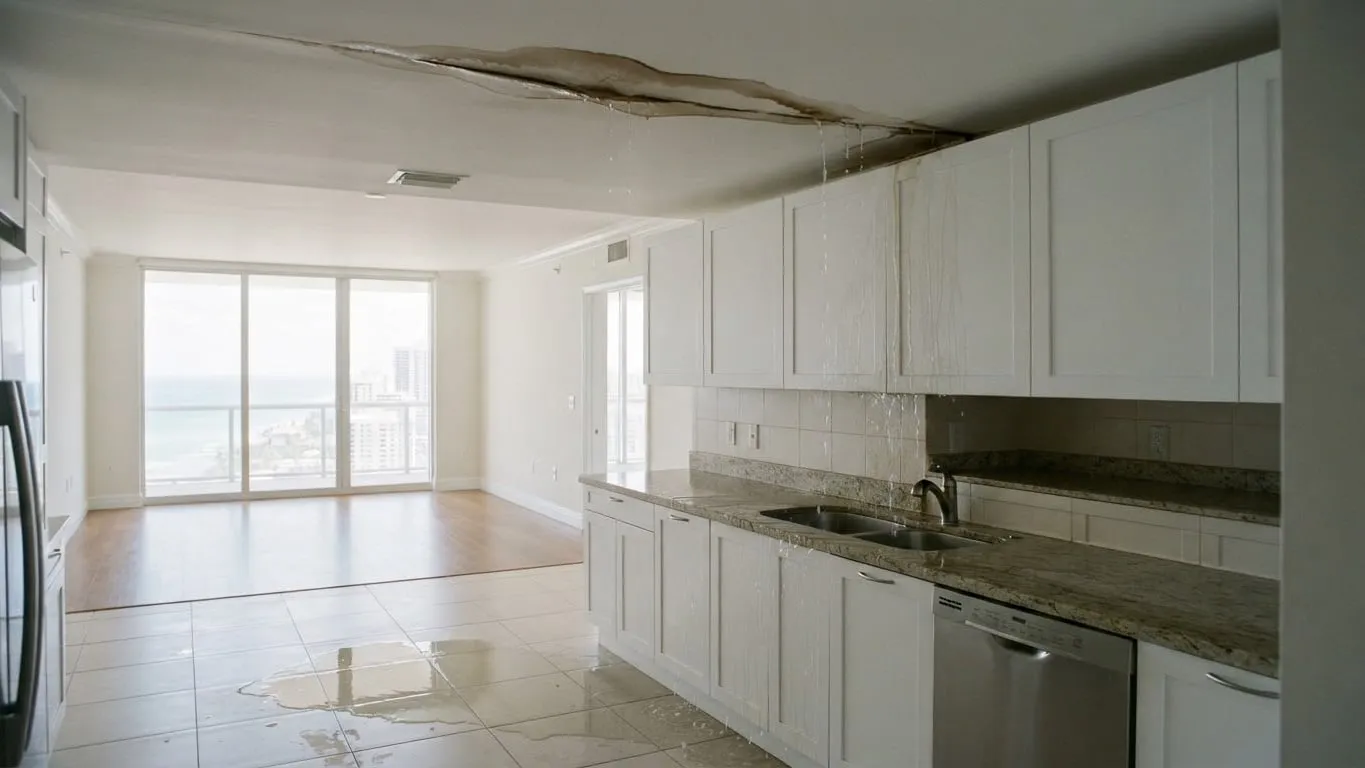
A ceiling that bulges or sags is holding water and can let go all at once, so keep everyone out from under it and stay away from light fixtures and ceiling fans in the wet area. Put buckets or towels under the drip and move furniture, electronics and rugs clear.
Before you move much, take photos and a short video of the ceiling, the walls and anything wet. Then go upstairs. The owner may not know yet, because a leaking toilet supply line or shower pan often shows up in the unit below first.
How does the water get shut off if nobody is home upstairs?
Call building management, the front desk or security and ask for the building engineer or maintenance. Most buildings can shut off water to the unit above. In many high-rises one riser valve feeds a whole vertical stack, so closing it may cut water to several floors for a while. That’s normal, and it’s the fastest way to stop a leak when the owner is away.
Seasonal units are the usual case. A snowbird’s unit can leak for days before anyone below notices.
Where is the water coming from?
Where water shows up isn’t always where it starts. It can run along the slab, down a riser or inside a wall first.
| What you see | Usual source |
|---|---|
| A drip or stain in the middle of a bathroom or kitchen ceiling | A toilet, tub, shower pan or supply line in the unit above |
| A stain near the AC closet or a supply vent | The AC drain line or pan above, or one in your own unit (AC leak water damage) |
| Water on a wall you share with the unit next door | A supply line, shower pan or riser in that shared wall |
| A stain near a window or the balcony after rain | Rain coming in from outside, not the unit above |
| A slow stain that keeps returning | A small, steady leak upstairs that was never fully fixed |
A ceiling still being fed from above won’t dry, so the source matters even though it isn’t in your unit.
What gets dried in my unit, and what about theirs?
Your unit gets its own moisture readings: the ceiling, the walls under the leak, the floor and anything else the water hit. Ceiling drywall that stays firm is usually dried in place and painted. Drywall that sags or stays soft comes down in that section, with the wet insulation above it. Walls get opened only where they read wet. That drying is standard water damage restoration, done room by room.
The unit above gets dried too, wherever the water came out. When several units are wet at once, management or the association usually coordinates the work, phased the way commercial water damage jobs are. Repairs in your unit wait until the ceiling and walls read back at a normal dry level, so new drywall and paint don’t go over damp framing.
Why photos and moisture readings matter in a building
Several people need to see what happened: you, the owner above, management and anyone handling a claim. Dated photos, the first moisture readings and daily readings during drying give everyone the same record of where the water went and when it was dry. Keep copies, and put each report to management in writing. An email with photos attached is enough.
The same unit keeps leaking into mine
A leak that comes back means the source upstairs was patched, not fixed. Report each one in writing with the date and photos. Have the ceiling read again even if it looks dry, because drywall that gets wet, half dries and gets wet again is where mold tends to start. When you call, mention the earlier leaks so the old stain gets read along with the new one.
Still dripping? Get management on the shutoff first, then call us, and we’ll get readings taken on your ceiling and walls and the drying set up.