Short answer
Keep people away from a sagging or bulging ceiling and any light fixture in the wet area, and catch the water. Then work out the source: rain points to the roof or a window, a bathroom above points to plumbing, and a stain near the AC closet points to the drain line. Call about the soaked drywall and insulation.
Call South Florida Restoration Co about a ceiling leak in a home or condo anywhere in Miami-Dade, Broward, Palm Beach and Martin counties, and we’ll get a licensed, insured crew working on the wet drywall, the insulation above it and the floor below. How much of the ceiling can stay depends on where the water comes from and how soon drying starts.
Is the ceiling going to come down?
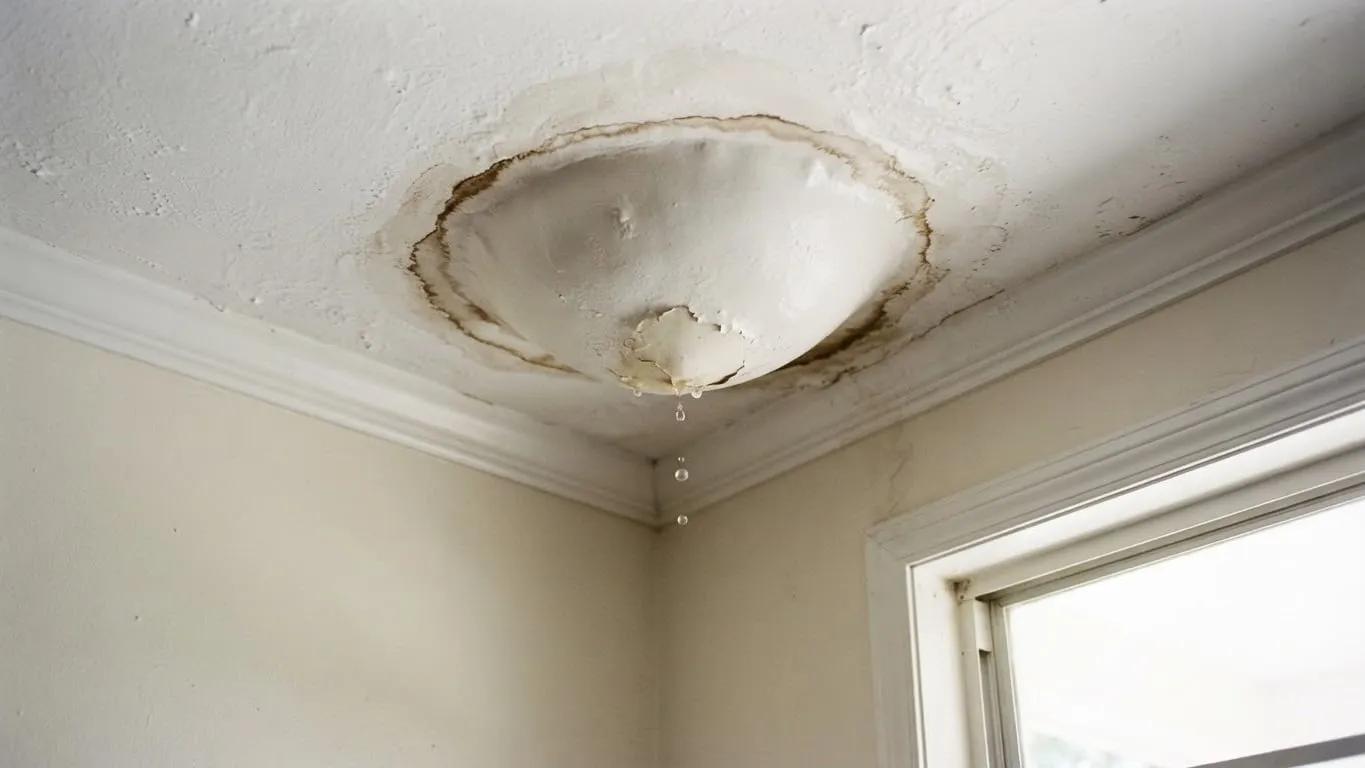
A flat stain with no sag usually isn’t. Watch for a bulge or belly in the drywall, cracks opening along the seams, a soft spot that gives when pressed, or water running along a seam instead of dripping from one point. Drywall holding a pocket of water can drop all at once, and wet drywall is heavy.
If you see any of those, move people and what you can out from under it and put a bucket under the low point. Stay away from light fixtures and ceiling fans in the wet area, and switch those circuits off at the breaker if you can reach the panel without standing in water.
Why is my ceiling leaking?
The timing of the drip usually points to the source.
| When it drips | Where it usually comes from | What that means for the job |
|---|---|---|
| Only during or after rain | Roof flashing, a window or door frame, a balcony above | The entry point gets sealed; the ceiling and the wall below it get dried |
| When someone upstairs showers or flushes | A shower pan, tub drain, toilet seal or supply line above | The fixture gets fixed; the ceiling gets dried or cut out |
| Constantly, worse on hot days | The AC drain line or drain pan | See AC leak water damage for the closet and wall checks |
| Out of nowhere, in a condo | The unit above, often while the owner is away | See water leaking from the condo unit above |
| Slowly, with no pattern | A pinhole leak in a supply line in the ceiling or wall | Readings trace it before any drywall comes down |
Why is there water damage in the ceiling under a bathroom?
The usual sources are a worn toilet wax ring, a cracked shower pan, failed grout or caulk around the tub, and the supply lines to the sink and toilet. A ring that grows each time the shower above runs points to the drain side. A stain that stays damp even overnight points to a supply line under pressure.
Either way, the leak gets fixed before the ceiling is dried, or the drying starts over. The drying itself is the same water damage restoration work used anywhere else in the house.
What happens to the wet drywall and insulation?
Moisture readings and firmness decide the drywall, not how bad the stain looks. Firm drywall that dries back to a normal reading is kept. Drywall that sagged, crumbles at the edges or won’t dry comes out in a clean section, from one framing member to the next, so the patch sits flat.
In a single-story home with an attic, wet batts and blown-in insulation over the stain usually come out, because they hold water against the drywall and framing and dry slowly. If the wet area is large, the attic gets air movers and a dehumidifier.
The EPA lists textured paint and patching compounds used on walls and ceilings among the materials that can contain asbestos, so an older popcorn or textured ceiling may need to be checked before anyone cuts into it. Mention the age of the house and the ceiling texture when you call.
The stain came back after it dried
A stain that returns means water is still getting in, or the ceiling was painted before it dried. If it reappears after the next rain or the next shower upstairs, the source in the table above is still open. A faint stain that bleeds through new paint with no new water usually needed only a stain-blocking primer.
If the spot feels damp or smells musty, hold off on a second coat and call. Tell us when it drips, what sits above the ceiling (roof, bathroom, AC closet or another unit) and whether any of it sags.