Short answer
A dry-out starts with extraction to pull standing water out, then drying equipment set to run day and night, with moisture readings taken every day. Materials that can't dry or took on dirty water come out. It's finished when wet materials read the same as dry ones the water never reached.
A water damage dry-out covers everything between the leak and the repairs: getting the water out, setting drying equipment, reading the walls and floors every day and cutting out what won’t dry. Call South Florida Restoration Co from a house or condo anywhere in Broward, Miami-Dade, Martin or Palm Beach County, and a licensed, insured restoration crew runs your dry-out. Here’s what the house looks like day to day, and what makes one job bigger than another.
Getting the standing water out
Extraction comes first, because pulling water out as liquid goes much faster than evaporating it out of the walls later. Truck-mounted or portable extraction units with wands go over carpet, tile and wood. Soaked carpet pad usually comes up at this stage. If water is still spreading through the house, emergency water removal comes before anything else.
What all the equipment does
| What you’ll see | What it’s doing |
|---|---|
| Air movers: low, snail-shaped blowers aimed along the walls | Push air over wet surfaces so the water evaporates |
| Dehumidifiers: boxy units, often with a hose to a sink | Pull that moisture from the room air and drain it away |
| Moisture meters: handheld, some with two metal pins | Measure how wet each material is |
| Thermal camera | Shows cool spots where water may sit behind a wall, for the meter to confirm |
| Plastic sheeting with a zipper door | Closes off the wet area so the machines dry a smaller space |
Air movers and dehumidifiers work as a pair. Air movers on their own only move the water into the air, and in a closed South Florida house that damp air settles back into the walls and floor.
Why the machines run around the clock
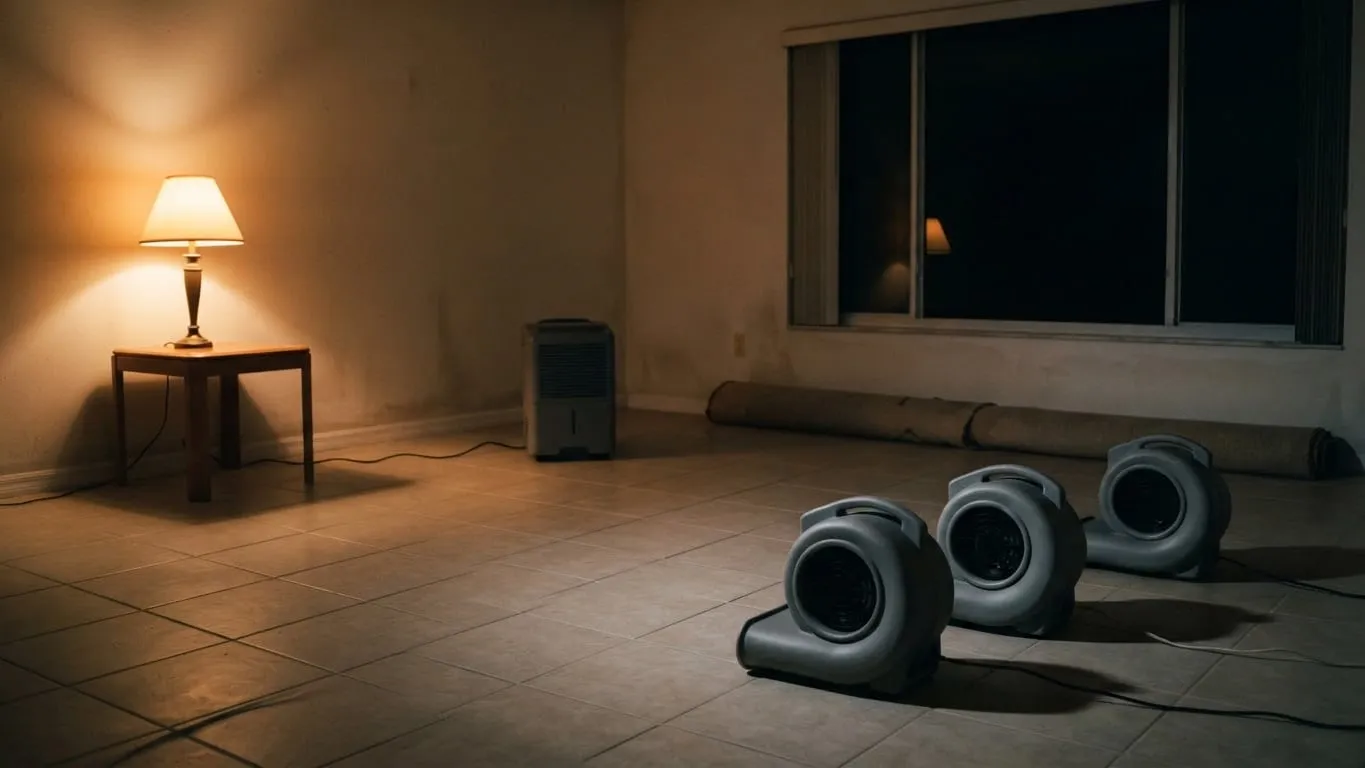
Drying is evaporation, and evaporation slows down as soon as the air stops moving or fills up with moisture. Every hour the equipment sits off, the humidity in the room climbs and the wet materials stop giving up water. Dehumidifiers also warm the room, which is normal and helps, because warm, dry air pulls water out of drywall and wood faster.
Reading the walls and floors every day
Each visit, the crew reads the same marked spots on walls, floors and cabinets and writes the numbers in a drying log, with the temperature and humidity in the house. The target for each material comes from the same material where the water never reached, like drywall in a dry bedroom or the slab in a closet across the house. A spot counts as dry when it reads like its dry match. The guide to drying times by material covers that method. This daily routine is the core of water damage restoration.
The readings move the equipment, too. As a room hits its targets, its machines come out. If a spot stops improving, water is usually trapped behind something, so a baseboard comes off or a few small holes go in near the floor to get air inside the wall.
Plastic walls and what gets removed
Plastic sheeting goes up from floor to ceiling for two reasons. It shrinks the space the dehumidifiers have to dry, and it keeps dust and debris contained while wet materials get cut out. With sewage or other contaminated water, EPA cleanup guidance notes that OSHA requires protective gear and containment, and that fans shouldn’t run until the water is known to be clean.
EPA guidance says drywall can stay when it hasn’t swollen and the joints are still tight, and that wet fiberglass and cellulose insulation should be thrown out and replaced. Carpet pad, swollen particleboard cabinet bases and porous materials that sat in dirty water usually come out as well. Walls get their own guide on when wet drywall gets cut out.
What sizes a dry-out
The size of the job comes from things you can see in the house:
- The wet area. How many square feet, rooms and floors the water reached, and in a condo, whether it got into the unit below. More wet area means more machines.
- The water category. A burst supply line that gets caught in the first hours usually dries where it sits. Gray and black water mean cleaning and more removal first, and the water categories guide shows which leaks land where.
- The materials. Drywall and carpet give up water quickly. Hardwood, cabinets and a concrete slab hold it and keep the equipment running longer.
- The drying days. Each extra day is another day of equipment and another round of readings.
- What has to be rebuilt. Every piece that gets cut out is a piece that goes back in once the readings say dry.
Ask the crew to walk you through the drying log at any visit. The numbers show why each machine sits where it does and when it can go.
When you call, say which rooms are wet, what leaked, roughly when it started and whether the floors are tile, wood or carpet. That sets up the first day of the dry-out.