Short answer
Stop running water and flushing in every bathroom, keep everyone, pets included, away from that room, and shut off fans and the AC if they blow through the area. Don't bleach and mop it. Wash your hands after any contact, photograph the damage, and call so the sewage can be contained and removed.
When sewage backs up into the house, the first hour is about keeping it in one room. Tell South Florida Restoration Co what backed up, in a South Florida house or condo from Homestead up to Jupiter, and we’ll get a licensed, insured crew on the cleanup, whether it came up a shower drain, out of a ground-floor toilet or from a septic tank that couldn’t drain. Sewage is Category 3 water, the dirtiest kind, so what you do before the crew shows up matters as much as the cleanup.
Sewage is coming up the drain. What do I do now?
- Stop using water. No flushing, showers, laundry or dishwasher anywhere in the house. Whatever goes down a drain has to pass the same blockage, and it comes back up at the lowest opening.
- Clear the room. Close the door if you can. Children, pets and anyone who’s sick stay away from the room.
- Don’t track it. Shoes or rubber boots stay where the wet floor starts. Rubber gloves for anything you touch.
- Leave fans off, and the AC too if the air handler or a return vent is in the wet area. Moving air carries the odor and droplets into rooms that are still clean.
- Don’t bleach and mop it. Mopping pushes sewage into grout and under baseboards, and bleach needs a clean surface to work on. The CDC says bleach should never be mixed with ammonia or any other cleaner.
- Wash your hands with soap and clean water after any contact.
- Take photos, then call.
Why sewage backs up in South Florida
Heavy rain and high groundwater. Rain and groundwater seep into sewer lines through cracks and joints, and a downpour can push the system past what it can carry. In June 2022, during Potential Tropical Cyclone One, Miami-Dade’s Central District plant, permitted for an average of 143 million gallons a day, reported flows over 310 million gallons of sewage and rainwater, and the county pointed to flooding and high groundwater. When the lines are that full, the lowest drain in a house is where it comes out. Power outages after a storm make it worse, because the pump stations that move sewage stop too.
A blocked main line. If several drains back up at once, or the tub fills when the toilet flushes, the blockage is in the line they share. Roots, grease and wipes are the usual causes, and the sewage cleanup page goes through them.
A septic tank that can’t drain. Plenty of homes in Miami-Dade, Palm Beach and Martin counties still run on septic. The EPA warns that when the water table is high there’s a risk sewage backs up into the home, and the only way to ease it is to use the system less. After days of rain the drainfield sits in soaked ground, and what leaves the tank can’t soak away.
What gets thrown out and what gets cleaned
Anything soft that sewage soaked into is usually gone: carpet and pad, rugs, upholstered furniture, mattresses, cardboard boxes, paper, plus the lower strip of any drywall it wicked into. Food, medicine and anything that goes in a mouth comes out if the water or splash reached it.
Hard, sealed surfaces get cleaned and then disinfected: tile, sealed concrete, metal, glass and hard plastic. Photograph everything before it goes to the curb.
If you’re not sure whether the water was sewage, how the water category gets decided walks through the usual sources.
Why the crew closes off the area
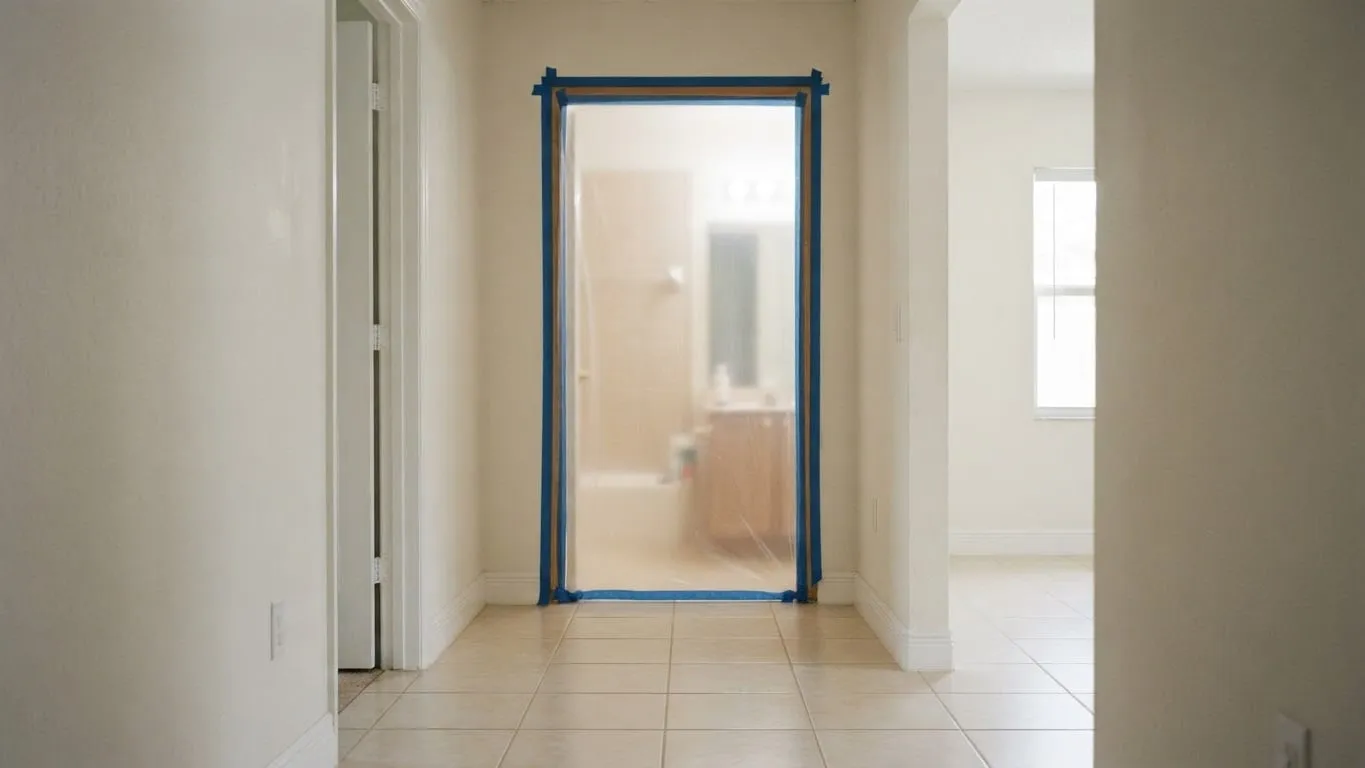
The first thing set up on a sewage job is containment: plastic sheeting over the doorways and openings between the affected rooms and everything else. It keeps the crew from tracking waste through clean rooms on the way in and out, and it keeps air from the work area out of the hallways and bedrooms.
Inside that area the waste and soaked materials come out, and every surface left behind gets washed and disinfected. Drying equipment goes in after that, since running air movers in a room with sewage still in it spreads the contamination.
What to tell us on the call
Say which drains backed up, whether toilets in other bathrooms still work, whether you’re on city sewer or septic, whether it was raining and how far the water reached. From that, we’ll send a licensed, insured crew to contain it.