Short answer
Most clean-water leaks caught early take about three to five days of drying once air movers and dehumidifiers are set up. Hardwood, concrete slabs, cabinets and anything that sat wet for days take longer. The job is done when moisture readings match dry material elsewhere in the house, not when the surface feels dry.
Drying time after a leak depends more on what got wet, and for how long, than on how much water you saw. In Miami-Dade, Broward, Palm Beach and Martin counties, South Florida Restoration Co gets a licensed, insured crew drying homes and condos, with air movers, dehumidifiers and moisture readings that show where the job stands each day.
What decides how long drying takes?
- How long the water sat. Water caught within an hour mostly sits on the surface. Water that ran overnight has wicked into drywall, under baseboards and down into the slab.
- What kind of water it was. Clean water from a supply line can often be dried in place. Sewage and outside flood water mean porous materials come out first.
- What the water reached. Drywall gives up moisture fast once air gets to it. Hardwood, plywood subfloor, cabinets and concrete hold it longer.
- Whether air can get to it. Water behind cabinets, under tile or inside a wall cavity dries slowly unless the baseboards come off or small holes let air in.
- Humid air. A closed-up house with the AC off in summer works against the dehumidifiers.
How long do different materials take to dry?
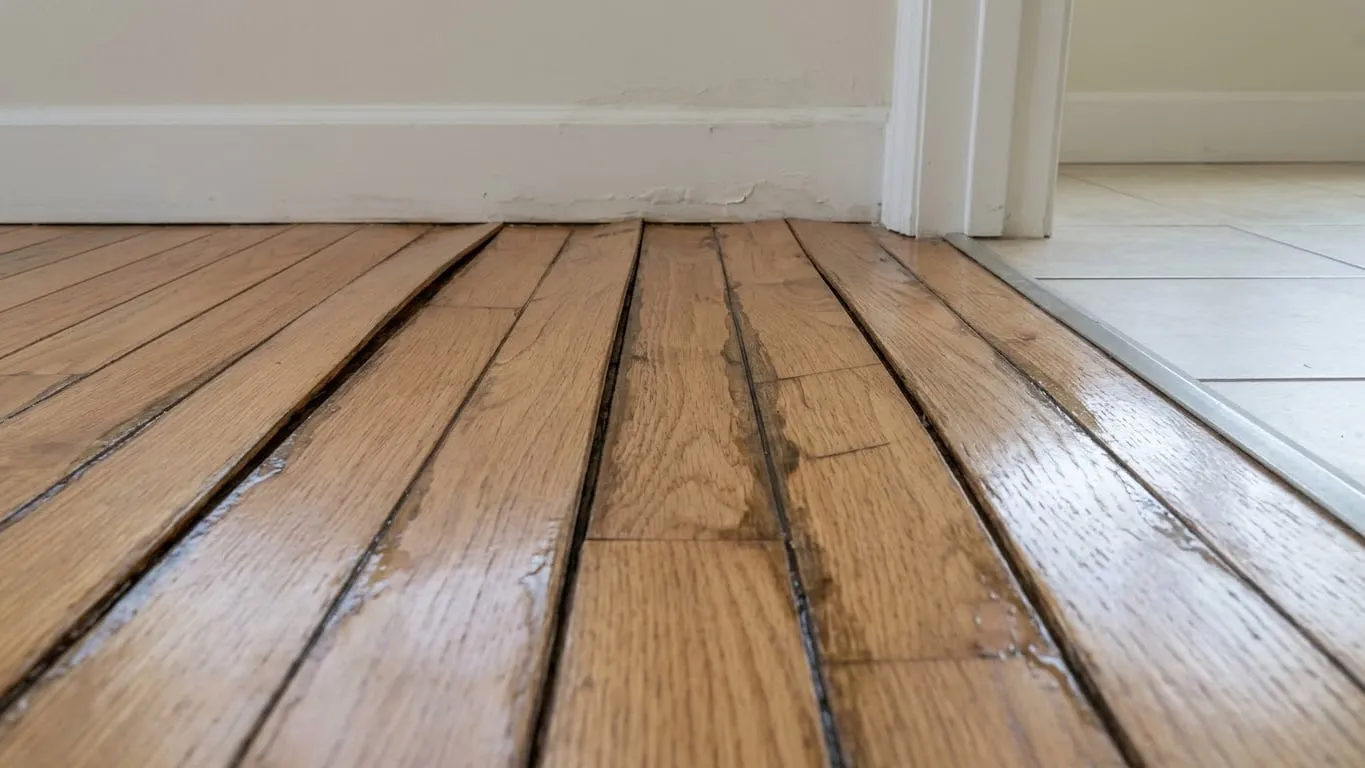
Each job goes by its own readings, but materials tend to follow these patterns.
| Material | What slows it down | Typical drying window | Usual outcome |
|---|---|---|---|
| Drywall | Wicks water up from the floor, a foot or more on a bad leak | Days, checked daily; gives up moisture fast once air reaches it | Dried in place if caught early; flood cut if soaked for days or hit by dirty water |
| Carpet pad | Soaks up water and holds it against the floor | Not dried; it gets pulled | Usually replaced |
| Carpet | Water left sitting under it | Days, checked daily; gives water up quickly once extracted | Often dried and kept when the water was clean |
| Concrete slab | Holds water deep and releases it slowly | One of the slowest parts, checked daily until readings match dry concrete | Readings decide when flooring goes back |
| Hardwood | Cups as the bottom of the boards takes on water | Slow, checked daily until the boards settle | Boards that stay cupped or start to crown are replaced |
| Laminate and particleboard cabinets | Swell at the edges and seams | Rarely recover once swollen | Usually replaced |
How do you know when it is dry?
The crew on your job takes moisture readings on materials the water never touched, like the same drywall in another room or the same slab in a dry closet, and uses those as the target. Wet materials get read every day until they match. That’s the method in ANSI/IICRC S500, the industry’s drying standard.
A wall can feel fine to the hand and still read wet a foot up inside the cavity. A slab can look dry while it’s still pushing moisture up into new flooring. Pulling the equipment early is how jobs end up with swollen baseboards, peeling paint and a musty smell a few weeks later.
Why do drying jobs here sometimes run longer?
Humidity here stays high for much of the year, so wet materials don’t give up water on their own the way they would somewhere drier. Slab-on-grade construction adds time too, because the concrete under the flooring holds water long after the walls are done.
In a condo, a leak into the unit below or through a shared wall means drying more than one unit, and each has to reach its own dry readings.
Can I do anything to speed it up?
- Keep the equipment running day and night, and ask the crew before moving it.
- Unless the AC caused the leak, keep it running. It pulls moisture out of the air too.
- Move rugs, boxes and furniture out of the wet area so air reaches the floor and walls.
- Hold off on paint and new flooring until the readings say dry.
When can repairs start?
Once the final readings match the dry targets, the rebuild can start: new drywall, baseboards, paint, flooring and cabinets. That’s a separate step, so a room that dried fast can take longer to look finished. Putting new materials over framing or a slab that still reads wet is a common reason the same room needs work again later.
If water is still standing in the house, call and tell us what got wet and how long it’s been, so the drying starts while more of it can be saved. Standing water comes out first with emergency water removal, and the full dry-out and rebuild is covered under water damage restoration.