Short answer
Not always. Drywall soaked by clean water can often stay and dry where it is if drying starts within a day or two, it isn't swollen, and the seams are intact. It gets cut out when it took on sewage or flood water, sat wet for days, crumbles, grows mold or has wet insulation behind it.
Wet drywall is the first thing most people want torn out after a leak, and a lot of the time it can stay. Call South Florida Restoration Co about wet walls in Martin, Palm Beach, Broward or Miami-Dade, and we’ll get a licensed, insured crew in to take readings, dry the drywall that can be saved and cut out the drywall that can’t. Moisture readings and the kind of water make that call, not the size of the stain.
Reading the wall before anything gets cut
The stain marks how far you can see the water, not how far it went. Drywall wicks water upward well above the visible mark. In an EPA study cited by the American Industrial Hygiene Association, drywall standing in half an inch of water for two days showed a visible line about three inches up, while a pin moisture meter found moisture nearly thirteen inches up.
So the crew reads the wall from the floor up, past the stain, until the numbers match dry drywall in a room the water never reached. Pinless meters scan through the paint without leaving marks. Pin meters show how wet the gypsum is inside. Those readings drive the rest of the water damage restoration plan.
What decides whether wet drywall stays
- The water. A leaking supply line, a fridge water line or rain is the best case. Drywall that soaked up sewage or storm water comes out, because drying it doesn’t clean it. The water categories guide covers which leaks fall where.
- How long it’s been wet. EPA guidance for clean water damage is built around getting materials dry inside 24 to 48 hours. Drywall left wet for several days is more likely to have growth on the back side, where no one can see it.
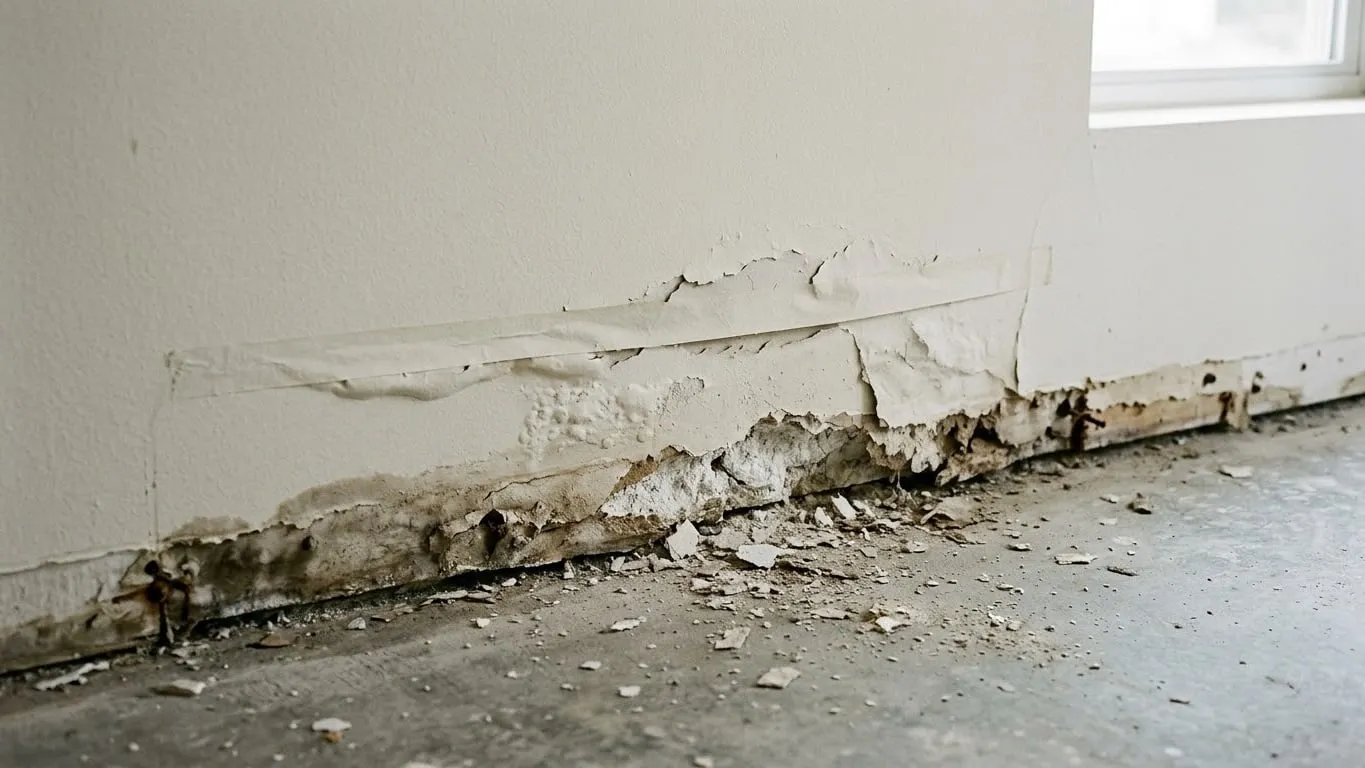
- Swelling and seams. The EPA says drywall may be dried in the wall if there’s no obvious swelling and the seams are intact. A bowed or bulging sheet, or tape lifting at the joints, means it comes out.
- Softness and crumbling. If the bottom edge gives when you press it, or the paper face peels and the gypsum underneath breaks apart, it won’t firm back up.
- Mold. Drywall with growth on it is removed inside containment as part of mold remediation, not dried and painted over.
- What’s behind it. Wet fiberglass or cellulose insulation keeps the drywall’s back face and the studs damp and gets replaced, so the wall has to open to get it out. Foam board that isn’t touching wood can often stay.
- Vinyl wallpaper. It seals moisture into the drywall behind it, so it usually has to come off before the wall can dry.
What a flood cut is and where the line goes
A flood cut removes the bottom section of drywall in a straight, level line around the room and leaves the upper wall in place. With the wall open, the framing, its bottom plate and the slab edge can dry and get cleaned, and wet insulation can come out.
The line goes above the highest wet reading, not above the stain. The same AIHA article puts flood cuts at about six to twelve inches above the wet drywall. The final height is often set by the sheet: drywall comes 4 feet wide, so a cut at 2 or 4 feet lets half a sheet or a full one, laid on its side, fill the gap with one straight seam. Storm and tide water bring their own rules, and flood cleanup covers why the whole lower wall usually goes after a flood.
Drying a wall that stays up
When the drywall can be kept, the inside of the wall still has to dry. The baseboard comes off, and small holes go in low on the wall, where the baseboard will hide them later. Air gets pushed into the cavity through those holes while dehumidifiers pull the moisture out of the room. EPA guidance calls for venting the wall cavity where possible, and university water-damage procedures describe the same drilled-hole method.
The wall gets read on the face and inside the cavity until both match the dry drywall elsewhere. This works when the insulation behind it stayed dry. If the insulation soaked up water, a flood cut is the quicker route.
On the call, say what leaked, how many days the wall has been wet, how high the stain reaches and whether the drywall feels soft or has wallpaper on it. That tells us whether the first visit is mostly drying or mostly cutting.